
The most common language-learning plan ever written begins with an ambitious promise: an hour a day, every day, starting January first. It fails in the second week, when the first busy day arrives, and the learner decides that they are simply not a language person. The failure is almost never about aptitude. It is about a plan that assumed free time, unlimited motivation and no ordinary tiredness.
A better plan is smaller and more honest. It sets a daily minimum that fits a real week, a few milestones that can be checked and a review at the end of each week that asks what worked. This guide explains how to build that plan for a New Year goal, how to choose the minutes, what milestones look like for an adult learner and how to recover when a week falls apart. It does not promise a particular level of fluency, since progress depends on the learner, the language and the time available.
In brief
- Short daily sessions beat long weekend cramming.
- A written weekly review shows which skills are moving.
- Plan for realistic milestones instead of vague fluency goals.
Start with the minutes you actually have
Before choosing any app, course or textbook, take a week and write down where your real time goes. Note the mornings, the lunch breaks, the commute, the evenings and the weekends. You are looking for the minutes that could be used without a big change to your life, not the hours you wish you had.
For most adults, fifteen to twenty minutes a day is a realistic starting point. That may sound small, but a steady quarter of an hour, repeated for a year, produces far more than a single long session that is skipped in February. If you find you have more time, add it later. A plan you keep is worth more than a plan that looks impressive on paper.
Set milestones you can check
A milestone is a small, observable goal. It should answer the question “how will I know I am making progress?” Good examples for a beginner include being able to introduce yourself without notes, understand the main point of a short audio clip, or hold a five-minute conversation about daily routines. Each milestone should be specific enough that you can say yes or no at the end of the month.
Avoid milestones that are vague or unmeasurable, such as “become fluent” or “feel confident.” These are real goals, but they are too big to check in a month. Break them into steps. A plan with three or four milestones for each quarter is easier to follow than one with a single distant target.
Build a weekly review
A weekly review takes ten minutes. At the end of the week, look at what you practiced, what you remember and what you struggled with. Decide one change for the coming week, such as shifting the practice time, adding a short speaking session or repeating a difficult topic. Write it down. The review turns a list of tasks into a learning process.
Many learners find it helpful to review on a fixed day, such as Sunday evening. Keep the review short and honest. If the week was bad, say so, and plan the next week around what is realistic.
Plan for the week that falls apart
Every plan meets a week that falls apart. A child is ill, a project runs late or a trip interrupts the routine. Expect this, and decide in advance what you will do. A useful rule is to never miss two days in a row. If you miss one day, do the smallest possible practice the next day, such as five minutes of review. If the whole week is lost, restart the next Monday without guilt.
Do not try to make up the missed time with a marathon session. Overloading a plan is a common way to quit. The aim is continuity, not heroics.
A sample plan for a beginner
- Weekdays: fifteen minutes of app or course practice, focused on new words and simple sentences.
- Thursday: a ten-minute speaking practice with a recording of your own voice.
- Weekend: one twenty-minute listening session, such as a short podcast for learners.
- Sunday: a ten-minute weekly review.
- Month end: check the milestones and adjust the next month’s goals.
This plan totals about two hours a week, which is modest enough to keep and substantial enough to matter over a year. Adjust it to your time and your goal.
Tracking without obsession
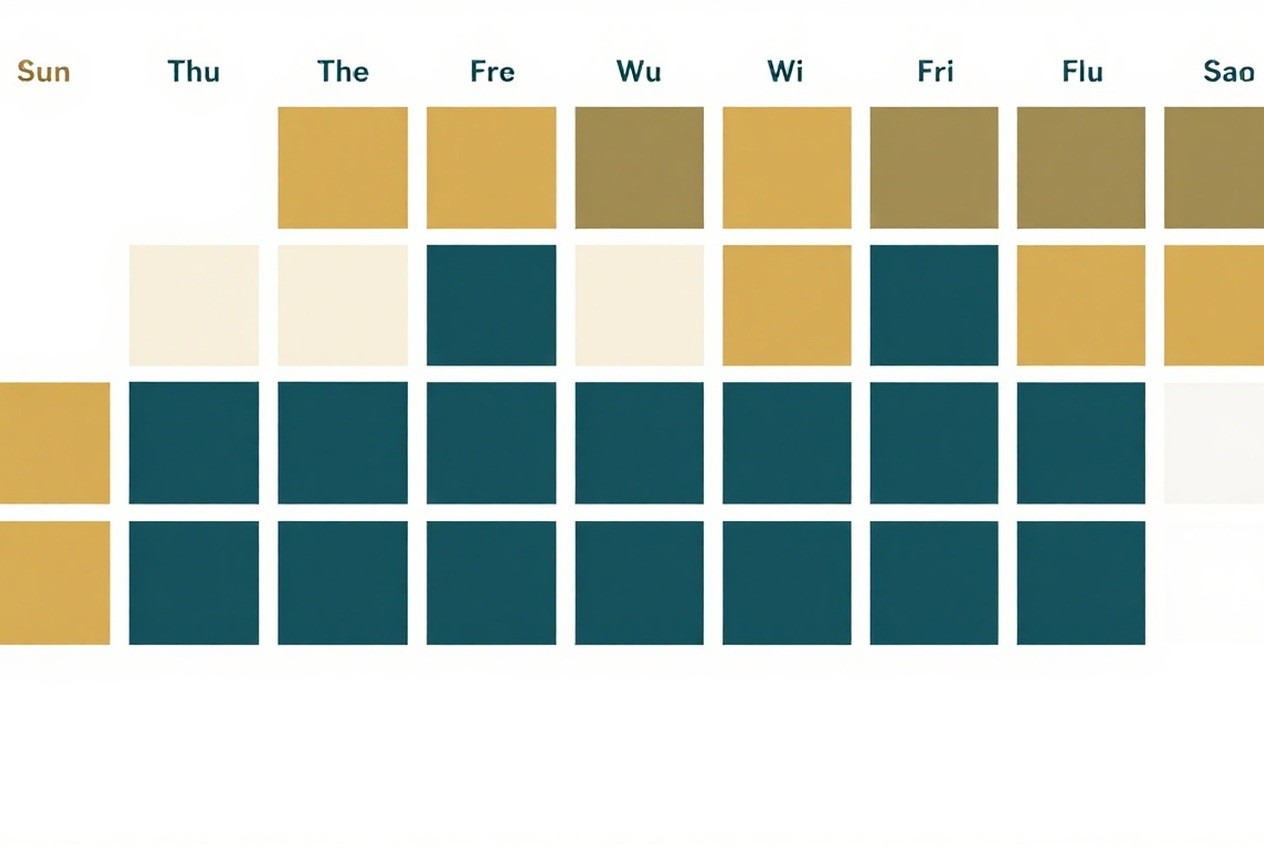
Track the minutes you practice and the milestones you reach. Avoid tracking every word or obsessing over streaks, which can turn learning into anxiety. A simple calendar with a tick on each day is enough for most people, and a note at the end of the month summarizing what you can now do is more useful than a long list of numbers.
Pairing the plan with the right tool
Your plan should shape your tools, not the other way round. If your plan needs speaking practice, choose an app with feedback or a course with live sessions. If you need a short daily routine, choose an app that suits the minutes you have. Our guide to language apps or live courses explains how to match the tool to the goal.
If you want to use spaced review in the plan, our guide to spaced repetition explains how apps schedule the words you need to revisit.
The short version
Build a New Year language plan around the minutes you really have, set milestones you can check and review every week. Plan for the bad week in advance, track progress without obsession and match the tools to the goal. A modest plan kept for a year is the most reliable path to progress, and no plan can promise a particular level of fluency.
Starting the plan
- Set a daily minimum of ten minutes that you can keep even on busy days.
- Choose one speaking task and one listening task each week.
- Review your notes every Sunday and set the next week’s targets.